The most expensive wood in the showroom might actually be the wrong choice for your home’s longevity. Many families assume that a higher price tag naturally means better quality, but the choice of kiker wood vs sheesham furniture is really about how you live and what your home needs. We understand the pressure of furnishing a new space, especially when you’re trying to stay within a wedding budget while fearing the threat of termites or wood warping. You deserve furniture that acts as a steady foundation for your memories. We focus on providing durable pieces that support your family’s growth and daily comfort through every season.
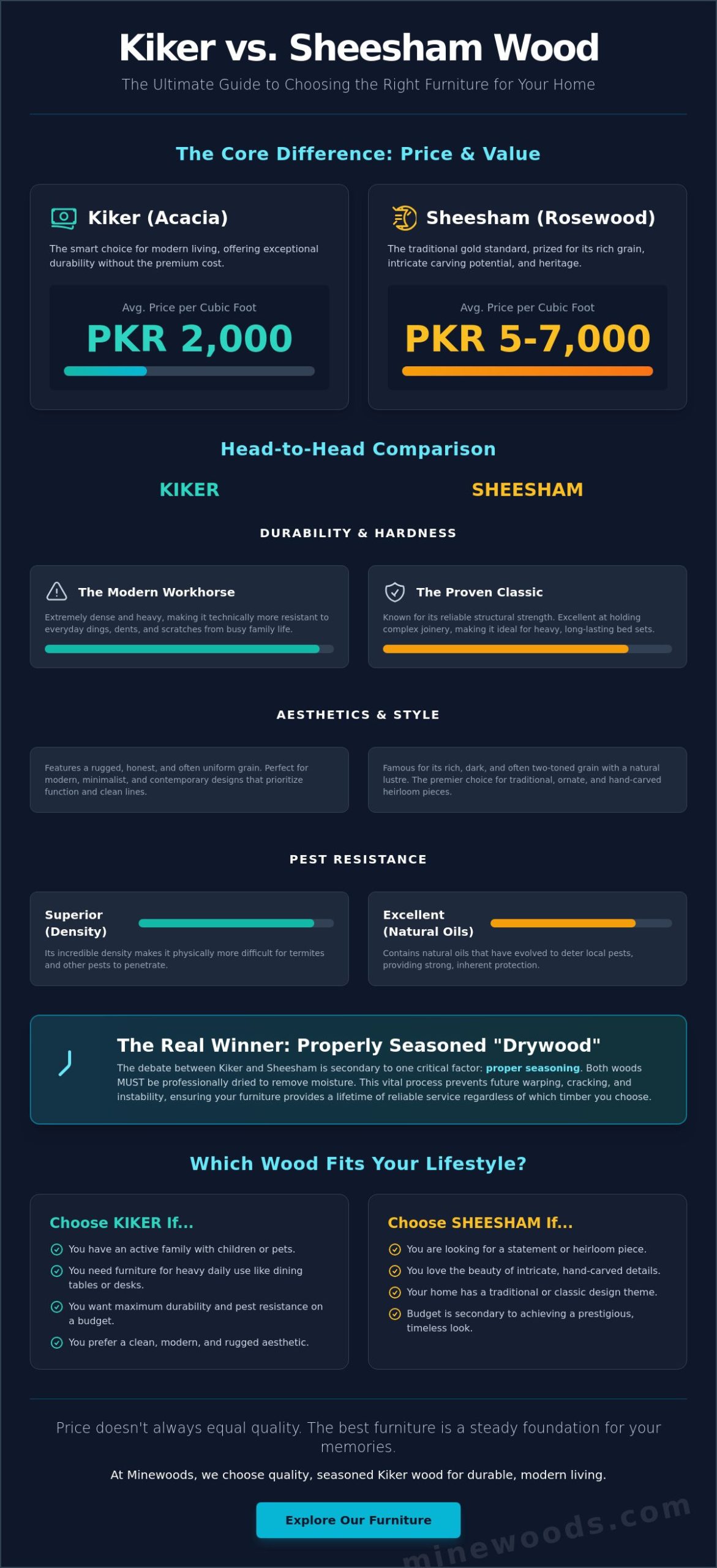
It’s easy to feel confused when you see Sheesham priced between PKR 5,000 and PKR 7,000 per cubic foot while Kiker remains at a much more accessible PKR 2,000. You might wonder if you’re compromising on durability by choosing the more affordable option, but the truth is often more nuanced. In this guide, you’ll discover the real differences between these two popular hardwoods so you can choose the perfect furniture for your lifestyle and budget. We’ll look at how each wood handles the local climate, their resistance to pests, and how you can support local artisans without overspending.
Key Takeaways
- Learn the structural differences between resilient Kiker and traditional Sheesham to choose the right foundation for your family’s daily life.
- Discover how the choice of kiker wood vs sheesham furniture often comes down to proper seasoning, a vital process that prevents warping and ensures long-term stability.
- Identify which wood type best fits your specific rooms, allowing you to furnish a beautiful home or wedding package without overstretching your budget.
- Understand the impact of supporting local artisans who use high-quality, sustainable materials to create furniture that withstands the unique Pakistani climate.
Understanding Kiker and Sheesham: The Pillars of Pakistani Cabinetry
In every Pakistani household, furniture is far more than a simple utility. It’s a part of our shared history. We pass down dining tables and bed sets like family stories, expecting them to hold the weight of generations. This deep respect for solid wood is why two specific trees have become the backbone of our local craftsmanship. When you begin comparing kiker wood vs sheesham furniture, you’re looking at the two most trusted materials in our markets. These woods have stood the test of time, enduring our blistering summers and humid monsoons with remarkable grace.
Solid wood furniture carries a cultural weight in Pakistan that engineered boards simply can’t match. It represents stability and a commitment to quality that mirrors the values of our homes. Whether it’s a grand wedding dowry or a first sofa for a young couple, we look for materials that feel permanent. Sheesham and Kiker dominate our industry because they are our own. They are born from our soil, making them naturally resilient to the specific challenges of our environment.
The Legacy of Sheesham Wood
For generations, Sheesham (Dalbergia sissoo) has been the undisputed gold standard for Pakistani timber. It’s famous for a rich, dark grain that catches the light, creating a natural lustre that needs very little help to look beautiful. Artisans across the country favour it because the wood is cooperative, allowing for the intricate, hand-carved details that define our traditional heirloom pieces. Because it’s native to our region, it has evolved a natural resistance to local pests. It feels like a piece of the earth brought indoors, offering a sense of warmth and prestige to any drawing room.
The Rise of Kiker (Acacia) in Modern Homes
While Sheesham holds the crown of tradition, Kiker (Acacia nilotica) is emerging as the hero of the modern, busy household. It’s an incredibly dense hardwood, often feeling heavier and tougher than many more expensive alternatives. This incredible density makes it a resilient choice for furniture that sees heavy daily use, like dining chairs or study desks. Choosing Kiker is also a step toward supporting our local ecosystems. These trees grow abundantly across our plains, and their use encourages sustainable harvesting practices that benefit our local farming communities. It’s a rugged, honest wood that offers incredible structural integrity without the premium price tag of rare imports.
Understanding the balance in the kiker wood vs sheesham furniture debate helps you see that both have a place in your home. One offers the sophisticated beauty of a legacy, while the other provides the tough, reliable support needed for modern life. By choosing either, you are supporting a long tradition of Pakistani woodworking that prioritizes heart-centered craftsmanship over mass-produced trends, a standard of excellence also seen in the unique collections at Nicholas Wells Antiques.
The Great Debate: Comparing Durability, Aesthetics, and Value
Choosing between the two most popular woods in Pakistan often feels like a balancing act between tradition and practicality. When you weigh the options of kiker wood vs sheesham furniture, you’re essentially deciding how you want your home to feel and function over the next twenty years. We believe that every piece of furniture should tell a story of reliability. While one wood offers a prestigious heritage, the other provides a rugged resilience that’s hard to beat for a growing, active family. Understanding these physical differences helps you invest your hard-earned money with total confidence.
Strength and Longevity Comparison
For families preparing for a wedding, the weight and “feel” of a furniture set are often the first tests of quality. Sheesham has long been the favorite for heavy bed sets because of its reliable structural strength and its ability to hold complex joinery without fail. However, Kiker is a surprising contender when it comes to raw toughness. It’s a remarkably dense timber that stands up exceptionally well to the daily bumps of vacuum cleaners or children’s toys. Acacia species like Kiker often reach higher density levels on the Janka hardness scale than Indian Rosewood, which means Kiker furniture is technically more resistant to the accidental dings and scratches of a busy household.
Longevity in Pakistan also means surviving our local pests. Both woods possess natural oils that help deter termites, provided the wood is sourced from the heartwood of the tree. Because Kiker is so dense, it’s often more difficult for pests to penetrate, making it a “workhorse” material for high-traffic areas like the dining room or a daily lounge. If you’re looking for a piece that combines this ruggedness with a sophisticated look, you might consider how a well-crafted Shaun Dark Wood Centre Table can anchor a room while standing up to years of use.
Aesthetics: Polish and Grain Patterns
Visual appeal is where these two woods truly go their separate ways. Sheesham is prized for its “flicker” and high-contrast grain patterns that range from golden brown to deep reddish-brown. According to research on Sheesham (Indian Rosewood) properties, its trunks yield a prized cabinet wood that responds beautifully to natural oil polishes, highlighting a sophistication that’s perfect for formal drawing rooms. It creates a sense of warmth that feels both expensive and deeply rooted in our local culture.
Kiker offers a more rustic, uniform charm. While its natural grain is often lighter and less dramatic than Sheesham, it’s a fantastic “canvas” for modern finishes. It takes on dark deco paints and contemporary stains with ease, allowing it to mimic more expensive woods or fit into a minimalist, modern apartment. This flexibility makes it easier to match your furniture with existing floor tiles or wall colors. When you consider that Sheesham is currently priced between PKR 5,000 and PKR 7,000 per cubic foot, while Kiker remains steady at PKR 2,000, the value of Kiker becomes clear. It allows you to achieve a high-end look and incredible durability while saving a significant portion of your budget for other home essentials.
The Seasoning Secret: Why “Drywood” is the Real Winner
You might have heard a neighbor or a relative claim that Kiker wood is prone to splitting or warping after just a few seasons. This is perhaps the most common myth in the kiker wood vs sheesham furniture debate. In reality, the issue isn’t the species of the tree; it’s the preparation of the timber. Seasoning is the intentional process of reducing the moisture content of wood until it reaches a stable equilibrium with our local environment. When wood isn’t seasoned, it remains “alive” in a sense, reacting violently to the air around it. Properly dried timber is the invisible foundation of any piece of furniture that lasts long enough to become an heirloom.
Pakistan’s climate is particularly demanding on solid wood. We experience blistering dry heat that can reach 45 degrees Celsius, followed by the heavy, humid air of the monsoon season. Wood acts like a sponge, expanding when it’s damp and shrinking when it’s dry. If the wood hasn’t been seasoned to the right percentage of moisture, these constant changes will cause the fibers to pull apart. You can often identify well-seasoned furniture by its sound and weight. If you knock on a solid wood panel and hear a sharp, clear ring rather than a dull thud, you’re likely looking at drywood that has been prepared with care.
The Problem with “Kacha” (Green) Wood
Buying furniture from unverified roadside workshops often means bringing “kacha” or green wood into your home. This unseasoned timber is cheaper because it hasn’t spent months in a kiln or a controlled drying shed, but the long-term costs are much higher. As the moisture eventually leaves the wood, you’ll notice joints beginning to gap and drawers that suddenly stick or refuse to close. Even the most beautiful polish can’t hide the damage; moisture trapped inside the wood will eventually cause the finish to bubble or peel. It’s a heartbreaking sight to see a wedding gift lose its shape because the wood wasn’t given the time it needed to rest.
The Minewoods Standard for Drywood
At Minewoods, we believe that your home deserves a foundation that won’t shift under your feet. We’ve made it our mission to use only properly seasoned Kiker for our furniture frames, ensuring that the internal structure of your sofa or bed is as stable as it is strong. This commitment is why we can confidently offer a lifetime frame guarantee on our pieces. We know that when Kiker is treated with the respect it deserves, it becomes a climate-smart choice that rivals any premium hardwood. Whether it’s the frame of a Petrus Puffy 3 Seater Sofa or the base of a Dora Sofa Set, our seasoning process ensures your investment remains a source of comfort for your family through every season of life.
Choosing the Right Wood for Your Lifestyle and Budget
Deciding on the right material for your home isn’t just a financial transaction. It’s a choice about the atmosphere you want to create for your loved ones. When we look at kiker wood vs sheesham furniture, we’re really looking at how your lifestyle fits into your four walls. A formal drawing room where you host guests once a month has different needs than a daily lounge where children play and the family gathers for tea every evening. We want to help you find that perfect balance where durability meets your personal sense of style.
Finding the right fit involves a few simple steps that look beyond the price tag. You should first assess the room’s usage to see if you need the prestige of Sheesham or the ruggedness of Kiker. Next, consider your long-term budget, especially if you’re planning for a full household of furniture. You should also think about the specific climate of your region, as we’ve discussed how seasoning helps wood handle our local humidity. Finally, decide if your heart is set on traditional, intricate carvings or the clean, minimalist lines that define modern Pakistani homes.
Best Wood for Wedding Furniture Packages
For many families, the wedding season brings the challenge of finding a complete furniture set that looks grand but stays within a sensible budget. This is where Kiker truly shines as a foundational material. Since Kiker wood is priced at PKR 2,000 per cubic foot compared to Sheesham’s PKR 5,000 to PKR 7,000, it allows you to furnish an entire home without compromise. By choosing a comprehensive option like our Charcoal-Elegan Modern Wedding Package 2, you’re investing in the structural integrity of seasoned Kiker. It’s the ideal way to get a premium, sophisticated look for a new couple’s home while keeping your wedding budget focused on the celebration itself.
Wood Selection for Sofas and Centre Tables
Functional items that your family interacts with every hour need a wood that can handle the pressure. Kiker’s incredible density makes it the perfect choice for the internal frames of heavy-use pieces. It provides a stable, unyielding foundation for plush seating like our Petrus Puffy 3 Seater Sofa, ensuring the comfort you feel on day one lasts for a lifetime. This toughness is also vital for hardworking items like a Liftable Top Centre Table With A Storage Drawer, where the wood must support moving parts and daily activity. You can Explore our Kiker wood sofa sets to see how we blend this resilient local hardwood with contemporary comfort and design.
We believe that your furniture should be a source of pride and a steady presence in your family’s journey. If you’re ready to see how these beautiful materials can transform your living space, browse our full range of handcrafted furniture.
Why Minewoods Chooses Quality Kiker for Modern Pakistani Living
At Minewoods, we believe that the soul of a home is found in the items that witness its daily life. Our choice in the kiker wood vs sheesham furniture debate is rooted in a deep commitment to our local community and the environment we share. We’ve seen how Kiker, when treated with the patience of our seasoning process, provides a sturdy and honest foundation for Pakistani families. It’s about more than just timber. Every piece we create is a bridge between local resources and the artisanal skills that have been passed down through generations in our workshops. We choose Kiker because it represents the resilience and strength of our own land.
When you choose a piece from us, you’re doing more than furnishing a room. You’re supporting the livelihoods of master craftsmen who pour their heart into every joint and polish. We prioritize Kiker because it allows us to offer high-quality furniture that remains accessible to everyone, ensuring that the concept of a legacy piece isn’t reserved only for those with the largest budgets. This social impact is the heartbeat of our operations. Every purchase helps a family in our community thrive, creating a cycle of support that goes far beyond a simple transaction. We take pride in being a benevolent provider of comfort and stability for your home.
Handcrafted Quality You Can Feel
We’ve intentionally moved away from the mass-produced, fragile nature of “Lasani” or engineered boards. These materials often fail to handle our local climate and lack the character of natural timber. Our focus remains on solid, artisanal wood that can withstand the test of time and the rigors of a busy home. Our master craftsmen personally select each Kiker plank, looking for the density and grain patterns that will best suit our specific designs. We also believe your furniture should be as unique as your family. We offer customization options for every order, and you can easily reach out to us via WhatsApp to discuss specific finishes or dimensions that fit your vision. This personal touch ensures that your furniture is a true reflection of your heart and home.
Building a Legacy, One Home at a Time
High-quality furniture should be a right, not a luxury. We want to see our pieces grow with your family, from the first sofa in a new apartment to the dining table where your grandchildren will one day sit. There is an immense emotional value in an object that stays steady while the world changes around it. By focusing on Kiker, we provide that permanence without the inflated costs of imported or rare timbers. We’re here to guide you through the process of creating a space that feels nurturing and inclusive. We invite you to browse our latest Kiker wood collections and support local artisans as you build your own family’s legacy.
Invest in a Foundation for Your Family’s Future
Choosing the right wood for your home is an act of love for the people who will live within its walls. We’ve explored how the kiker wood vs sheesham furniture debate often comes down to the care taken during the seasoning process rather than just the species of the tree. While Sheesham remains a beautiful tradition, properly dried Kiker offers a climate-smart and budget-friendly alternative that doesn’t sacrifice structural integrity. You’re now equipped to choose the material that best supports your daily rhythms and long-term goals.
At Minewoods, we take pride in being part of your journey. Every item is handcrafted in our local Pakistani workshop, where we prioritize quality and community impact. We offer a lifetime frame guarantee on selected sofa sets because we believe your peace of mind is paramount. Each purchase directly supports local artisan families, ensuring our rich heritage of woodworking continues to thrive. Discover Durable Kiker Wood Furniture for Your Home and start building a legacy of comfort and stability today. Your perfect home is just one thoughtful choice away.
Common Questions About Kiker and Sheesham Furniture
Is Kiker wood good for bed sets in Pakistan?
Kiker wood is an excellent choice for bed sets in Pakistan due to its remarkable density and structural integrity. It handles the weight of heavy mattresses and daily movement without sagging or loosening at the joints. While Sheesham is the traditional favorite for grand carvings, a Kiker bed offers a stable and long-lasting foundation for your family’s rest at a much more accessible price point.
Which wood is more termite-resistant: Kiker or Sheesham?
Both woods offer natural resistance to termites when sourced from the heartwood, though Sheesham has a slightly higher reputation for repelling local pests. However, the density of Kiker makes it extremely difficult for termites to penetrate once it’s properly seasoned and polished. We ensure our wood is treated with care to protect your home’s legacy from these common threats.
Why is Sheesham furniture more expensive than Kiker?
The price difference in kiker wood vs sheesham furniture stems from growth rates and market demand. Sheesham trees take much longer to reach maturity and are in high demand for intricate, traditional carvings, pushing prices to between PKR 5,000 and PKR 7,000 per cubic foot. Kiker grows faster and is more abundant, allowing us to keep prices near PKR 2,000 per cubic foot while maintaining incredible durability.
How can I tell if my furniture is made of real solid wood?
You can identify real solid wood by looking for continuous grain patterns that wrap around the edges of the piece. If you see perfectly repeating patterns or “stickers,” it’s likely a laminate or engineered board. Solid wood also feels significantly heavier and produces a clear ring when tapped, unlike the dull thud of hollow or composite materials.
Does Kiker wood furniture warp in the summer heat?
Properly seasoned Kiker wood won’t warp in the summer heat because its moisture content has been stabilized during the drying process. Warping only happens with “kacha” or green wood that still contains high levels of sap and moisture. We prioritize thorough seasoning so your furniture remains a steady, unyielding presence through every blistering heatwave and humid monsoon.
What is the lifespan of a Kiker wood sofa set?
A well-crafted Kiker wood sofa set can easily last for twenty to thirty years when cared for properly. Its lifespan depends heavily on the quality of the frame construction and the initial seasoning of the timber. Because we’re confident in our craftsmanship and the resilience of this wood, we provide a lifetime frame guarantee on our sofa sets to support your family’s long-term comfort.
Can I customize the polish colour on Kiker wood furniture?
Yes, you can absolutely customize the polish color on Kiker wood furniture to match your home’s unique aesthetic. While its natural grain is often lighter than Sheesham, it acts as a perfect canvas for dark deco paints, walnut stains, or modern matte finishes. This flexibility allows you to achieve a premium look that fits perfectly with your existing floor tiles or wall colors.
Is Kiker wood considered a sustainable choice for furniture?
Kiker is considered a highly sustainable choice because it’s a fast-growing, native species that thrives in our local environment. Using Kiker reduces the pressure on slower-growing forests and supports local farming communities where these trees are abundant. By choosing this wood, you’re making a heart-centered decision that balances your household needs with the health of our local ecosystem.